Having lived as a woman with access to almost infinite information for the vast majority of 38 years, in a world where 140 million women are pregnant a year, I’ve been amazed that pregnancy has still been a journey of surprises for me. So, while my experience is in no way unique, I thought I’d write it down, for myself, and others, and my future child.
The First Trimester
The first time I noticed my pregnancy I was lying in the bath. Watching my stomach, protruding slightly from the water, I saw it moving, in time to a heartbeat. Placing my hand on it I felt the regular pulse. It wasn’t the baby’s heartbeat, it was mine, as my body began to reroute blood to the important work of building a brand new human.
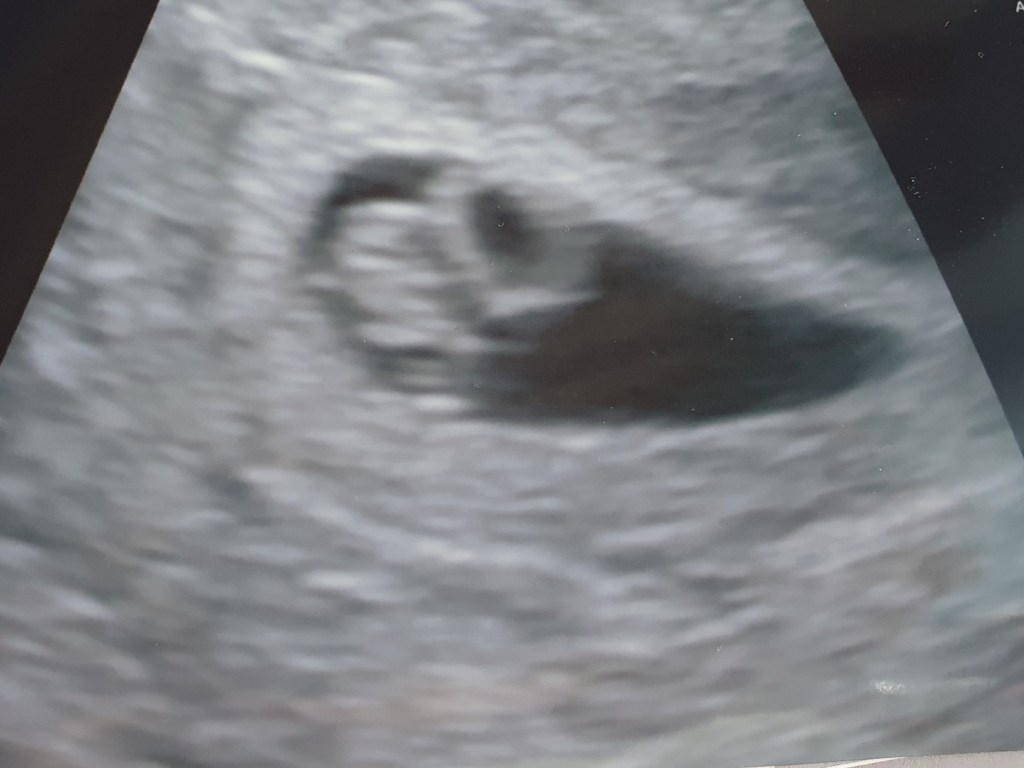
It took a while for other symptoms of pregnancy to appear. After years of being poked and prodded by medical professionals during the IVF process, I found it strange to be unobserved for weeks on end. From time to time I couldn’t help wondering if I really was pregnant, when everything had gone so quiet.
When the bump finally began to appear I was amazed how solid it was even from the very start. Waking up in the mornings, when I guess gravity had sucked my belly fat to one side, a small round, hard lump sat in the middle of my abdomen, like I’d swallowed a ball. Then one day it was gone, my belly flat and soft again. Where it went, I’ve no idea, but it hid for a few days before reappearing, as if nothing had happened.
Morning sickness, the one part of pregnancy I had expected, arrived with a bang. Sitting on a video call with my music teacher I felt suddenly dizzy and disorientated. Excusing myself I headed downstairs and sat on a chair, confused and unsteady.
That was the only time I physically threw up, during the pregnancy, suddenly and violently. But while I didn’t throw up again, ‘morning sickness’ took over my life. All day, every day, I felt nauseous. Along with the nausea, came utter exhaustion and breathlessness. I had expected breathlessness in the later trimesters, when the baby would be crushing my lungs, but from relative fitness I now struggled to walk up the stairs without losing my breath.

It was hard to keep working through this phase. I had the benefit of working from home, so I could keep myself as comfortable as possible, but with exhaustion and sickness I found it difficult to concentrate, and during some meetings I just wanted to bury my head in my hands. I napped as much as a could, on my lunchbreaks, after work, and went to bed early. I spent most evenings on the sofa under a blanket.
I tried plenty of home cures for the sickness; ginger, sour foods, lemon, chewy sweets. Nothing helped for more than a few moments, and some days I just couldn’t eat, though not eating also caused the sickness to intensify. Anything heavily-flavoured became hard to swallow, even my favourite curry was impossible to eat.

Each week I waited, hoping the sickness would go. Eventually, as I moved into the second trimester it faded a little at a time, going from being all day, to part of the day, to only for a few hours, until eventually it was thankfully gone. In time my energy also returned, though I still ran out of it more quickly. The breathlessness remained.
Second trimester
Throughout my first and second trimester my endometriosis was a bit of a flip of a coin. Intense pain in my lower back would appear for days at a time before disappearing again. While the literature had suggested I would get a break during pregnancy, the pain seemed instead to increase.
Though the morning sickness thankfully disappeared, a raft of new symptoms reared their heads. Heartburn wasn’t something I’d ever had very regularly, but now it became a persistent tormentor. While some foods did seem to aggravate it, mostly it seemed completely decoupled from eating, attacking regularly and at any time. At first I tried to tough it out, but as the months went on, and the heartburn came more regularly and lasted longer, I started to wonder if medication was the best way to deal with it.
Along with the heartburn, another new symptom was an early morning wake up call. At 4am, 3am, 2am, 5am, on any given night, I would suddenly find myself wide awake, unable to get back to sleep, followed by sleep-walking through the following day.

Another barrier to sleep were leg cramps, causing sudden, excruciating pain as I lay in bed at night. Not an event possible to sleep through. The next day, the leg which cramped would be sore and stiff, as though I’d pulled a muscle, and I’d limp my way through the dog walk.
These symptoms were particularly ironic as Chris suffered these kinds of pains through his Polycystic Kidney Disease, pre-his kidney transplant. Cramps and pain in his sides plagued him, and robbed him of sleep. Between the endodemetriosis and pregnancy it seemed I was able to try on many of his symptoms, a stark reminder of why we pursued the IVF, so our child would be saved this kind of discomfort and pain.
In this trimester the bump really started to grow. Even though it was still possible to hid it under a baggy jumper, I could feel its impact. Already I felt myself waddling slightly, and groaning as I bent to pick things off the floor.
When trying to think of how to explain my bump to someone who has never, or could never be pregnant, I decided the most accurate description is that I feel like someone has inflated a balloon inside me. It doesn’t seem like a natural part of me. Instead it feels like an implant. The balloon is stable and sturdy, as though filled with cornflower rather than water or air, but it’s also a barrier to movement or breath. It’s an extra demand on my body.
Third trimester
Even after many conversations with both men and women on what the third trimester was like, I really didn’t know what to expect. Some said it was great, all the sickness was gone and their energy returned, others said it was the worst of the three.
For me I think the second trimester was the easiest. In the first trimester nausea made life really unpleasant, and the third trimester was tormented by heartburn and acid reflux. As these twin demons increased week on week I’d gone from drinking glasses of milk, to one Renee tablet every few hours, to eating them like sweets. Finally, I even moved onto prescription medication.
While the day was often uncomfortable, with pain in my chest or acid regurgitating into my mouth, it was the night that was really unpleasant. Lying flat was no longer an option, and I propped myself up on my pregnancy pillow as best I could.
Whether I slid down in the night or my body just relaxed more, I’d often wake up and be forced to fling myself upright, feeling if I didn’t I’d projectile vomit the acid that was rising in my throat. On the worst nights this might repeat hourly.
Largely, Chris had gotten off pretty scot-free with my pregnancy. No odd cravings to run to the shops for, no need to take on extra chores as I was able to keep going throughout. Even my needing to bolt out of bed rarely woke him. Until the snoring started. A stuffy nose during pregnancy is pretty common, as the hormones strangely cause the airways to constrict. That, plus the added weight, led to fairly consistent nightly snoring during the third trimester. Sometimes I even found myself giving out the odd snore while I was awake. Still, a good set of earplugs and he survived.
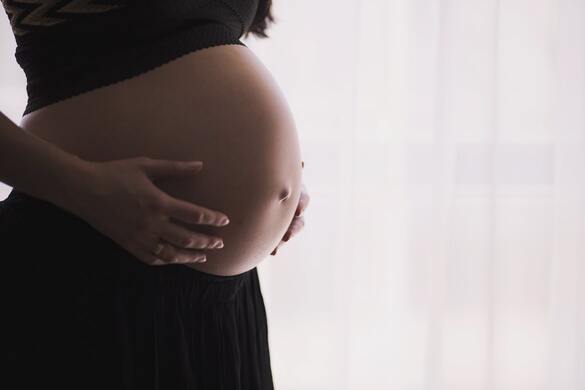
As the bump got bigger it of course got more inconvenient, with picking anything up or tieing my shoelaces making me want to have a sit down from the exertion. Standing for long periods also became less realistic, and every movement or action required a lot more energy than before.
I was pleased I still managed all my usual activities; walking the dog, running, doing DIY. The main difference was they were slower and more tiring, but picking up a dropped pencil was tiring so I figured if I’m going to be tired it might as well be for a good reason.
With the bigger bump came more discomfort. My skin felt stretched, while ligaments along its base ached. Luckily this was balanced by the endometriosis pain having taken a break by this point. My feet too became swollen, adding another barrier to getting my socks and shoes on.
The baby also became busier. The first trimester had brought bubbles, and the second flutters, the third brought prods, pokes and rolly pollies. Most sensations were entertaining rather than painful, but anything to the taut muscles at the base of the bump caused me to wince.
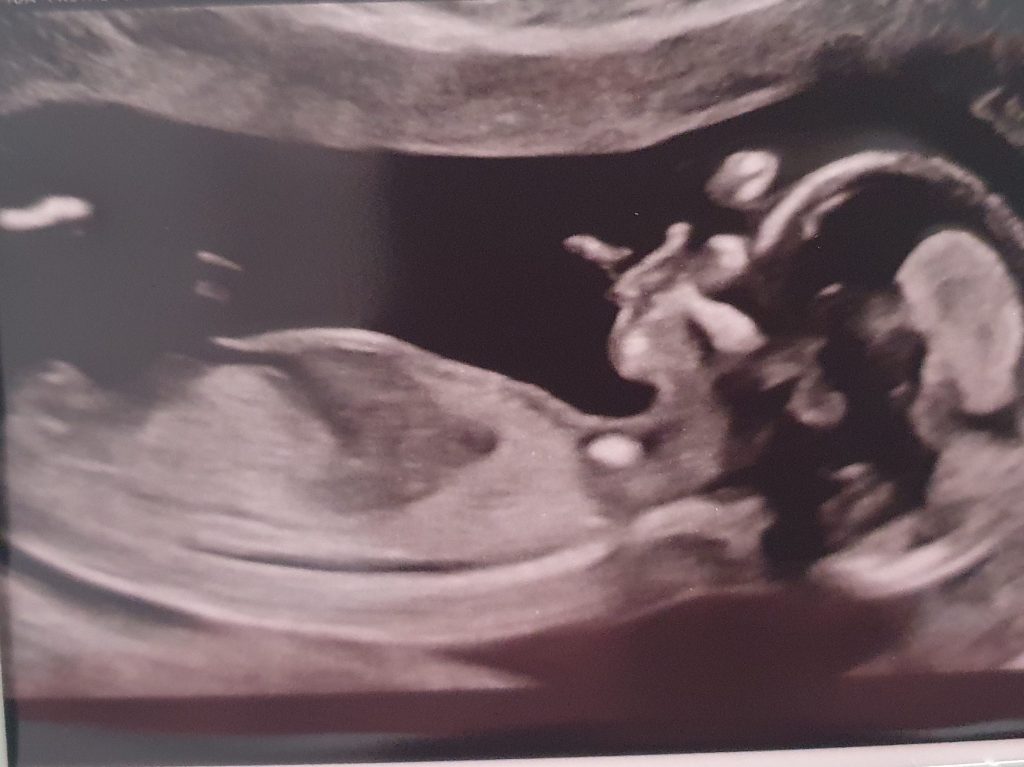
The extra weight of the baby, and associated fixtures, also began to wear down the rest of my body. My legs, my strongest body parts, felt constantly tired, as though I’d been on a very long walk. My right knee, which can occasionally ache on a long run or a walk, deteriorated, hurting almost constantly. Plantar fascitis, a pain in the heel of the foot, also reared its ugly head in both feet after years of reprieve.
Overall, I’d compare pregnancy to running a marathon. Every day your body gets a little more tired, your muscles ache a little more deeply, your breath comes a little harder and at times you feel very sick and very tired. I chose to run my marathon, and I chose to be pregnant. I run the race because I think the finishline is well worth the pain…but there is pain, and discomfort, and we don’t acknowledge that enough. It’s a physically demanding processes, one which, to me, doesn’t feel ‘natural’ or ‘what my body was made for’. It feels like it was tacked on after the body was almost completely finished with its designs, something that very nearly doesn’t fit, an evolutionary afterthought.
Of course that doesn’t mean I think my body can’t do it. I’m not convinced a marathon is particularly natural either, and we managed that.

I guess my main point is, given that everyone I met was delighted I was having a baby, and the news is full of politicians and pressure groups bemoaning the need for women to birth more babies, there should be more support for getting through the process.
To be honest, throughout my pregnancy I often felt I was owed a weekly gift. Nothing fancy – just like a donut or maybe a leg massage. But I guess more practically, things like pregnancy illness having the same right as general illness rather than being counted as part of maternity leave, significantly more education and honesty on what pregnancy and birth really involve (before you’re in it), more flexible working options and fully funded childcare, would be a great starting point. And the donut.

I’ve reached my due date now, and the pregnancy is nearly over. Overall, I’d say I had a good pregnancy. I’ve been healthy and active throughout, and the baby has developed well. Yes the symptoms weren’t pleasant, but they wouldn’t stop me going through it all again (although if there was an option for Chris to take a turn I’d opt for that). And while I feel it’s been an eye-opening journey for me into the pregnant body, perhaps if I did it all again it would be completely different, a new journey with a different passenger. Now I just have to get through labour – but I heard that was the easy part….right?
United Nations Sexual and Reproductive Health Agency
I’m very aware I have a great many privileges in my pregnancy – privileges which many women don’t. If you want to support pregnant women across the globe, a great organisation to donate to is the United Nations Sexual and Reproductive Health Agency. Just follow the link above.

 Other ways to make a baby
Leave a reply to Kathy Morris Cancel reply